
Each year in the US over 200,000 people go under the knife for weight loss procedures, and that number has increased in the past 10 years (1). I’ve been getting a lot of questions lately about weight loss surgeries, and while I’ve spoken to many people (including very close family members) who have gotten these surgeries or who are considering them, I’ve never been through that difficult experience myself.
Before sharing my thoughts and perspective on weight loss surgery (which is also known as bariatric surgery) I thought the best way to fully understand the topic was to speak in depth with someone about their personal experiences (and regrets).
Recently, I had the opportunity to interview a former client and current Planos Client Outreach Coordinator, Vanessa, on the Nutrition Blueprint Podcast, about her experience with gastric bypass surgery.
You can check out the episode on Spotify HERE to hear the full conversation, but this article will give a brief overview of weight loss surgeries, why I don’t recommend these surgeries for most people, and who these surgeries might be suitable for.
Types of Surgeries
There are several types of surgeries, and in recent years some more experimental procedures have started to be developed and are still undergoing testing. Below are the main types of surgeries and a few key facts about each.
Gastric Bypass
This surgery involves dividing the stomach into two parts and sealing off the lower section from the upper pouch. Then, the upper stomach is directly connected to the lower part of the small intestine, giving food a “short cut” past most of the intestine (2). The result is that the patient gets full quickly from the small stomach, and doesn’t absorb as many calories, from bypassing a lot of the intestine (3,4)
This surgery usually results in quick weight loss, and many people keep the weight off for 10 years or longer (4). But it’s not without risks. Bypassing the intestine reduces absorption of calories, but it also reduces the body’s ability to take in nutrients (2). The result? A risk of nutrient deficiencies that means you have to follow a careful diet and take supplements for the rest of your life. There’s also a risk of an issue called “dumping syndrome,” where food “dumps” from the stomach to the intestines too quickly and causes nausea, pain, weakness, bloating, and diarrhea (4).
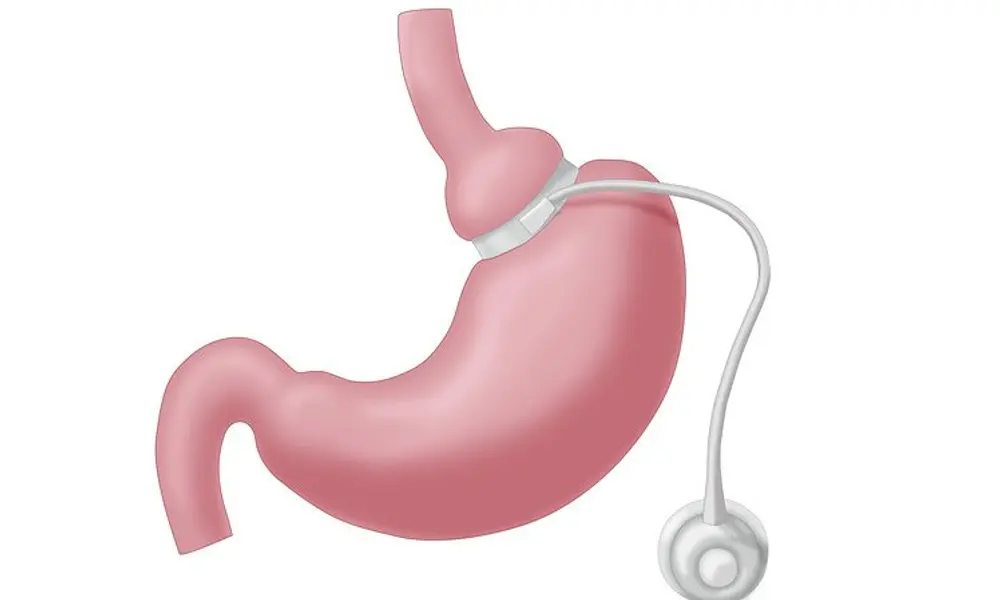
Adjustable Gastric Band (a.k.a. a Lap Band - Laparoscopic Adjustable Gastric Band)
This procedure involves the insertion of an inflatable band around the stomach, which squeezes the stomach into a smaller upper section and a larger lower part, connected by a small opening. When food is consumed, the upper section is filled quickly, resulting in the sensation of fullness after only about ½-1 cup of food (4).
While this surgery is safer than a gastric bypass, and is reversible because the band can be removed, weight loss is typically less significant and weight may be regained over the years. Additionally, vomiting can occur if food is consumed too quickly (4).
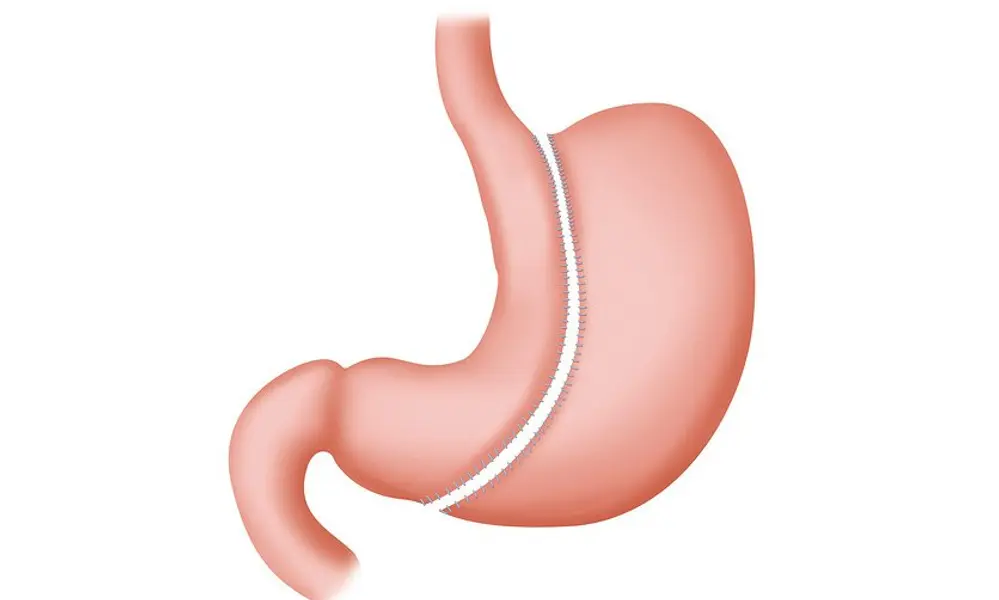
Sleeve Gastrectomy (a.k.a. Gastric Sleeve)
This surgery involves about 75% of the stomach being removed. What’s left of the stomach is about the size and shape of a banana (a thin tube or “sleeve”), which connects to the intestines. This surgery reduces the amount of food that can be eaten, and also reduces levels of ghrelin, the “hunger hormone”. (4)
This surgery has the advantage over gastric bypass that it doesn’t affect the intestines, so nutrient deficiency is less of a concern (although still may occur due to reduced amount of food consumed). It’s an irreversible surgery, and it still has all the potential risks of undergoing surgery. (6)
Can anyone get this surgery?
Weight loss surgery has been around for decades. The first ever recorded weight loss procedure dates back to 1954 (7). But it didn’t become mainstream until the 80s or 90s. Up until recently the requirements and qualifications for weight loss surgery were long and the person has to meet specific criteria to be eligible.
In the U.S, most states require a BMI 40 or higher and if below that, you will need to have at least one obesity-related medical condition, such as diabetes, high cholesterol, high blood pressure, or sleep apnea, along with at least 6 months of a supervised attempt to lose weight (8)
But in other countries, no requirements are needed and anyone willing to get it and pay for it is able to.
Do I ever recommend weight loss surgery?
My perspective on weight loss surgery, which may be controversial to some, is that unless you have a medical condition like diabetes, high blood pressure, high cholesterol, sleep apnea, or you are morbidly obese, you should never consider weight loss surgery as a way to lose some pounds.
Here are a few reasons why:
Cost
These surgeries in the US typically cost between $20-25,000, and they’re not always covered by insurance (9). If you spent that money (or even a portion of it) on coaching, therapy, training support, etc., you could likely achieve even better, more sustainable results (but more on that in point #4).
Complications
Often these surgeries can have severe side effects and complications, including bleeding, vomiting, and nutrient deficiencies, as mentioned above. Other long term risks include ulcers, bowel obstruction (a blockage of the intestine), gallstones, and hernias, along with all the other usual side effects that go along with any surgery (excessive bleeding, blood clotting, infection, pain) (4, 10).
Mental/emotional impact
Many weight loss surgeries are done without giving people the adequate psychological support they need. This is a dramatic life change that many people are not prepared for. The following is a quote directly from Vanessa during our interview:
“As months went by, I started consuming foods again, but it was a very hard process because the change had been done in my stomach and not in my mind. So to see such a small amount of food in front of me and even with such a small amount not being able to consume all of it was shocking for me, it was so hard. I got to a point where I was desperate to eat and I physically couldn’t.”
Many people who reach a point where they begin to consider weight loss surgery have a difficult relationship with food, which may include emotional eating and binge eating. The drive to use food to manage emotions will not disappear as a result of surgery, and binge eating could result in weight regain (11,12). Additionally, body dysmorphia is a concern for people who see their body change very quickly following surgery. (12)
A recent study showed that 23% of people who got this kind of surgery developed a mental health issue after, such as depression, anxiety, or an eating disorder (11).
The results aren’t permanent
While studies have indicated that many people can sustain the weight loss that comes from surgery in the long term, these surgeries are not a magical solution (10). According to the Mayo Clinic,
“It's possible to not lose enough weight or to regain weight after weight-loss surgery. This weight gain can happen if you don't follow the recommended lifestyle changes. If you frequently snack on high-calorie foods, for instance, you may have inadequate weight loss. To help avoid regaining weight, you must make permanent healthy changes in your diet and get regular physical activity and exercise.” (3)
The stomach will slowly stretch over time to accommodate more food, and if habit changes are not established prior to surgery, this can be a difficult process after the surgery takes place if someone has no experience with healthy eating and exercise.
Failure to explore other options for improving health
I don’t want to send the wrong message by suggesting that gastric bypass is a “shortcut”. There is no doubt that individuals who choose this route do so because they see it as the only option, often after many failed attempts to lose weight. However, I feel that many people don’t consider the possibility that if they invested the money they are going to spend on weight loss surgery to seek professional help, such as from a dietitian or a therapist, they may be able to achieve the same results they are seeking.
Unfortunately, many people are dissuaded from doing this because they do not believe they will be able to follow through, and therefore results are not “guaranteed” in the same way they are with surgery.
Additionally, people often act out of desperation, rather than being willing to take the long-term route. I have even seen this to the extreme of purposely gaining weight to be able to qualify for this surgery. Sustainable healthy lifestyle change comes from small shifts rather than an all or nothing approach, and when someone is extremely uncomfortable, there is a stronger drive to do something drastic.
Who could consider weight loss surgery?
As mentioned above, I recommend that weight loss surgery only be considered in the case of significant medical conditions and morbid obesity. In addition, these surgeries should also only be used as a last resort, after attempts at lifestyle modification have been made. Finally, mental health support and counseling are essential, both prior to and following surgery, along with the support of dietitians who specialize in bariatric surgery.
Conclusion
Weight loss surgery is not the “quick fix” that many people think it is; it is associated with significant risks and should not be taken lightly. If you, a friend, or a family member are considering this surgery, evaluate your options. As I mentioned above, I am not against bariatric surgeries; I am against people having these surgeries with the belief that it is the only solution to their problems, and because they fail to believe in their ability to make the necessary changes without surgery.
Consider, what could you achieve if you committed to 6 months of lifestyle changes, while investing in the education and accountability necessary to make those changes balanced and effective? Before settling on weight loss surgery, I want you to give yourself that: 6 months spent with the mindset of working on yourself to avoid surgery, with an all-in commitment to the process. I know the challenges of living in a body you’re not comfortable in are incredibly difficult. But, the freedom you will feel once you start making small, sustainable changes and losing weight steadily over time is unmatched
If you don’t know where to start with your weight loss journey, but just know that you are ready to feel better in your body, improve your overall health, and lose weight while actually LOVING the process, we’re here for you!
In our signature coaching program, two things usually happen when our clients apply themselves and implement our strategies:
1) The weight comes off easily when they learn to fix their lifestyle and optimize their habits.
2) They build a strong foundation to keep the weight off and continue losing weight over time, even beyond our program.
What’s our formula? Helping you to believe you are capable of doing this and then giving you our tools and holding you accountable to use them every week!
If you want to see if you’re a good fit for our program, I encourage you to APPLY HERE and let’s have a conversation about how we can get you to your goals over the next few months.
References
American Society for Metabolic and Bariatric Surgery (ASMBS). Estimate of bariatric surgery numbers, 2011-2018 [Internet]. American Society for Metabolic and Bariatric Surgery (ASMBS); 2018[ cited 2022 Mar 6]. Available from: https://asmbs.org/resources/estimate-of-bariatric-surgery-numbers
Mayo Clinic Staff. Guide to types of weight-loss surgery [Internet]. Rochester: Mayo Clinic; [updated 2022 Jan 6; cited 2022 Mar 6]. Available from: https://www.mayoclinic.org/tests-procedures/gastric-bypass-surgery/in-depth/weight-loss-surgery/art-20045334
Mayo Clinic Staff. Gastric bypass (Roux-en-Y) [Internet]. Rochester: Mayo Clinic; [ updated 2020 Oct 17; cited 2022 Mar 6]. Available from: https://www.mayoclinic.org/tests-procedures/bariatric-surgery/about/pac-20394258
Griffin RM. Choosing a Type of Weight Loss Surgery [Internet]. WebMD; [reviewed 2020 July 22; cited 2022 Mar 6]. Available from: https://www.webmd.com/diet/obesity/weight-loss-surgery-making-the-choice
OHSU Bariatric Services. Gastric Bypass Surgery for Weight Loss [Digital Image]. Oregon: OHSU; [cited 2022 Mar 14]. Available from: https://www.ohsu.edu/bariatric-services/gastric-bypass-surgery-weight-loss
NHS. Types: Weight loss surgery [Internet]. NHS; [reviewed 2020 Apr 14; cited 2022 Mar 6]. Available from: https://www.nhs.uk/conditions/weight-loss-surgery/types/
Faria GR. A brief history of bariatric surgery. June 2017; 2;3 (92-93).
Mayo Clinic Staff. Weight-loss surgery: Is it an option for you? [Internet]. Rochester: Mayo Clinic; [updated 2020 Dec 16; cited 2022 Mar 14]. Available from: https://www.mayoclinic.org/healthy-lifestyle/weight-loss/in-depth/gastric-bypass-surgery/art-20046318
Lerche Davis J. Paying for Weight Loss Surgery [Internet]. WebMD; [reviewed 2021 Nov 17; cited 2022 Mar 6]. Available from: https://www.webmd.com/diet/obesity/financing-weight-loss-surgery
Madura JA, DiBaise JK. Quick fix or long-term cure? Pros and cons of bariatric surgery. F1000 medicine reports. 2012;4.
Dawes AJ, Maggard-Gibbons M, Maher AR, Booth MJ, Miake-Lye I, Beroes JM, et al. Mental Health Conditions Among Patients Seeking and Undergoing Bariatric Surgery. JAMA. 2016;315(2):150.
Sarwer DB, Fabricatore AN. Psychiatric considerations of the massive weight loss patient. Clinics in plastic surgery. 2008 Jan 1;35(1):1-0.
TO CONNECT WITH ME
On Instagram: www.instagram.com/andresayesta
On TikTok: https://vm.tiktok.com/tLLoyS/
On Youtube www.youtube.com/c/andresayesta
Podcast IG page: www.instagram.com/planos_nutrition
On Facebook: https://www.facebook.com/planosnutrition
Our Facebook Community: https://www.facebook.com/groups/1934943366627043/?ref=bookmarks