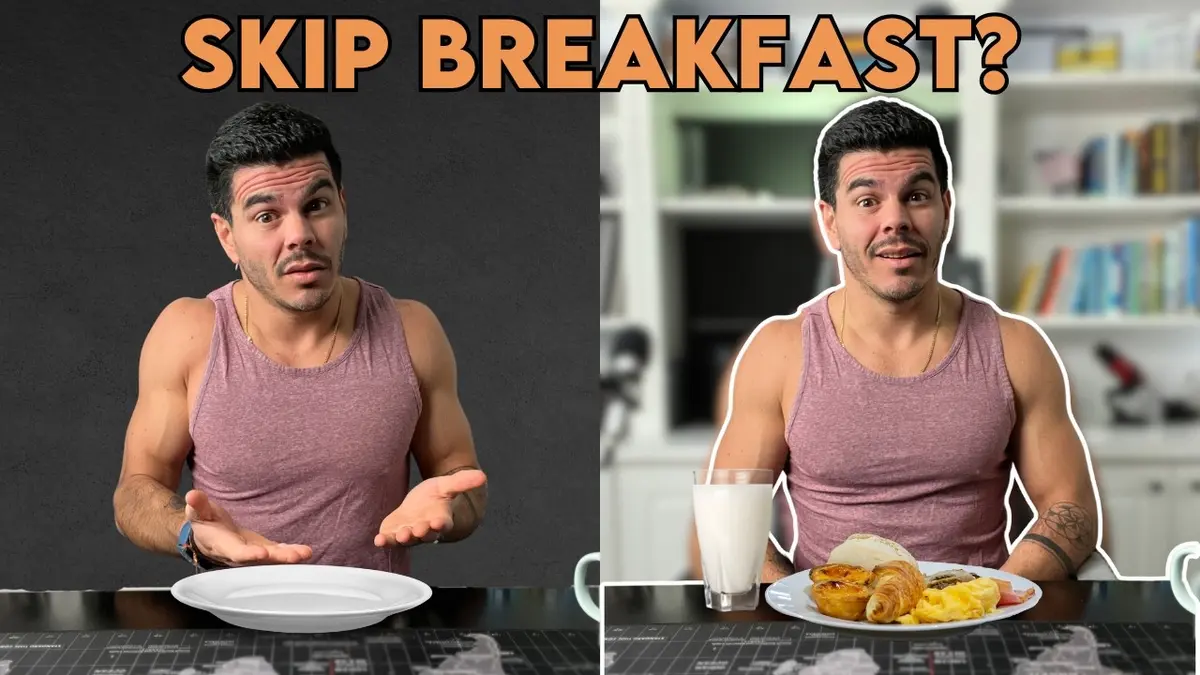
The Breakfast Debate Has Been Going on Too Long
One week you're told breakfast is essential for your metabolism. The next week, intermittent fasting is the key to fat loss and skipping breakfast is how the lean people do it. Both sides sound confident. Both sides cite science. And you're stuck trying to figure out what to actually do at 7am.
Here's the truth: the research doesn't fully support either camp. What it does show is that the right answer depends on who you are, what your goals are, and how your body responds. That's what this article breaks down.
First, Let's Kill the "Breakfast Jumpstarts Your Metabolism" Myth
The idea that breakfast is the most important meal of the day started as a marketing campaign in the early 1900s to sell more cereal. That doesn't automatically make breakfast bad, but it's worth knowing the origin before treating it as gospel.
The metabolism claim specifically doesn't hold up. The thermic effect of food, which is the calories your body burns during digestion, happens whenever you eat, not just in the morning. Eating breakfast doesn't activate your metabolism in any special way. What actually drives your metabolic rate is your total daily food intake, your muscle mass, your activity level, and your overall body composition.
Timing is not the lever most people think it is.
What the Research Actually Shows
Here's where it gets more nuanced. Studies consistently show that extending your overnight fast for at least 16 hours can improve metabolic health markers. Blood sugar and insulin levels drop, and your body shifts toward using stored fat for energy. That's the real mechanism behind intermittent fasting, and it's legitimate.
But there's a counterpoint that doesn't get enough attention. Skipping breakfast can increase leptin, the hormone that signals hunger to your brain, which makes some people more likely to crave high-calorie foods later in the day. A systematic review of nine studies found that breakfast skippers tend to weigh more than consistent breakfast eaters.
That tracks with what I see in my practice all the time. When clients skip breakfast, they often end up overeating at night, not because they have poor willpower, but because their hormones are pushing them in that direction.
Here's the bottom line on the research: most of the metabolic benefits tied to skipping breakfast come down to one thing. People end up eating fewer total calories. If you skip breakfast and still eat the same number of calories across the rest of the day, the advantage disappears. The mechanism isn't magical. It's just math.
How Breakfast Affects Your Hunger Hormones
Your breakfast decision has a real impact on the hormones that control how hungry you feel for the rest of the day.
When your stomach is empty in the morning, it produces ghrelin, the hormone that signals your brain it's time to eat. After you eat, ghrelin drops and you feel satisfied. Leptin, produced by fat cells, signals fullness. The back-and-forth between these two hormones regulates your appetite all day long.
What matters here is what you eat, not just whether you eat. A high-protein breakfast reduces ghrelin more effectively than a high-carbohydrate breakfast, which is why people who eat eggs in the morning tend to feel full longer than people who eat cereal. A bowl of Frosted Flakes with no protein source isn't a great breakfast. It's just sugar with a morning timestamp on it.
Who Benefits From Eating Breakfast
Based on the research, a few groups consistently do better with breakfast:
Children and teenagers. A systematic review in Nutrition Research Reviews found that breakfast has a positive short-term effect on cognitive function in children. A separate study in the journal Nutrients found that adolescents who ate breakfast before cognitive testing performed better than those who skipped it. If you have kids, this one matters.
People with diabetes or blood sugar issues. A clinical trial published in the Annals of Internal Medicine found that people with impaired glucose tolerance who ate a low-glycemic breakfast, think oats rather than white bread or cereal, showed significantly better cognitive performance and blood sugar control. If you have insulin resistance or metabolic issues, breakfast composition is especially worth paying attention to.
Active people and athletes, especially those training in the morning. Your muscles store carbohydrates as glycogen, and that glycogen is what fuels higher-intensity exercise. A comprehensive review in Sports Medicine found that carbohydrate availability is a key factor in muscle glycogen levels before and during training. If you're doing an intense morning workout, eating beforehand is likely going to serve you better than going in completely fasted.
Who Does Better Skipping Breakfast
Skipping breakfast isn't wrong for everyone. There are people who genuinely do better without it:
People practicing intermittent fasting. A meta-analysis in the European Journal of Nutrition found that intermittent fasting protocols, which typically involve skipping breakfast, can produce meaningful improvements in body weight and glucose metabolism for certain individuals. The key word is certain. It works well for some people and backfires for others.
People who aren't hungry in the morning. Forcing yourself to eat when you have no appetite doesn't produce any special benefit. If you're not hungry and your overall diet is solid, skipping breakfast is not automatically going to make you overeat or gain weight.
People who respond well to a longer fasting window. A systematic review in Sports Medicine found that in most studies, eating carbohydrates before a workout did not improve performance compared to training fasted. For lower-intensity exercise especially, a fasted morning workout is a viable option for many people.
One caveat worth knowing: a clinical trial in the American Journal of Clinical Nutrition found that while breakfast skipping can increase energy expenditure, it also raised postprandial insulin levels, meaning your insulin spikes higher than usual when you eventually break your fast. How much that matters likely depends on what you eat to break the fast and how your body handles blood sugar in general.
Four Questions to Figure Out What Works for You
With all the conflicting research, the most practical thing you can do is treat yourself as the experiment. Here are four questions to guide that process:
1. Do you wake up hungry? If yes, your body is asking for fuel. Ignoring that signal consistently tends to lead to overeating later in the day.
2. How do you feel mentally when you skip breakfast? If you feel sharp and focused, that's a good sign your body handles the fasted state well. If you feel foggy and irritable, that's useful data pointing in the other direction.
3. Do you have any metabolic health concerns? Diabetes, insulin resistance, and blood sugar regulation issues are all reasons to take breakfast more seriously, particularly the protein and fiber content of what you eat.
4. What does your exercise routine look like? If you train first thing in the morning at high intensity, eating beforehand is worth testing. Longer, lower-intensity activity is generally more compatible with a fasted state.
The Bottom Line
Skipping breakfast is not inherently good or bad for fat loss. Eating breakfast is not inherently good or bad for metabolism. What matters is your total calorie intake, the quality of what you eat, and whether your approach is something you can actually sustain.
The most honest recommendation: try both for a week each. Eat a protein-rich breakfast one week. Skip it the next. Track your energy, your hunger, your workout performance, and how you feel overall. Your body will give you more useful data than any study can.
Pick the pattern that makes it easier to eat well the rest of the day, because that's the one that will actually move the needle.