It’s 9pm. The Kids Are in Bed. And You’re Standing in the Kitchen Again.
You didn’t plan to eat. You weren’t even hungry. But there you are, bag of chips in hand, wondering how this happened for the third time this week.
If that scenario sounds familiar, here’s what I need you to understand: this is not a willpower problem. It’s not a discipline problem. It’s a biology problem. And once you understand what’s actually happening in your brain and body when stress eating kicks in, you can stop fighting it the wrong way and start fixing it the right way.
Why Willpower Keeps Failing You
When you’re stressed, your body releases cortisol, a hormone that functions like a fire alarm going off throughout your system. When that alarm is blaring, your brain starts screaming for quick energy, specifically sugar and fat, because it’s convinced you need fuel to handle whatever crisis is happening.
This is not a character flaw. It’s your biology doing exactly what it was designed to do. Your body was built to crave high-calorie foods under stress. The solution isn’t to fight that drive with willpower every time. It’s to work with your biology instead of against it.
That means replacing the willpower approach with what I call an if-this-then-that system: when you feel a specific trigger, you have a specific tool ready to deploy. No decision-making required under pressure. No white-knuckling through a craving. Just a pre-planned response that your rational brain chose before the emotional one took over.
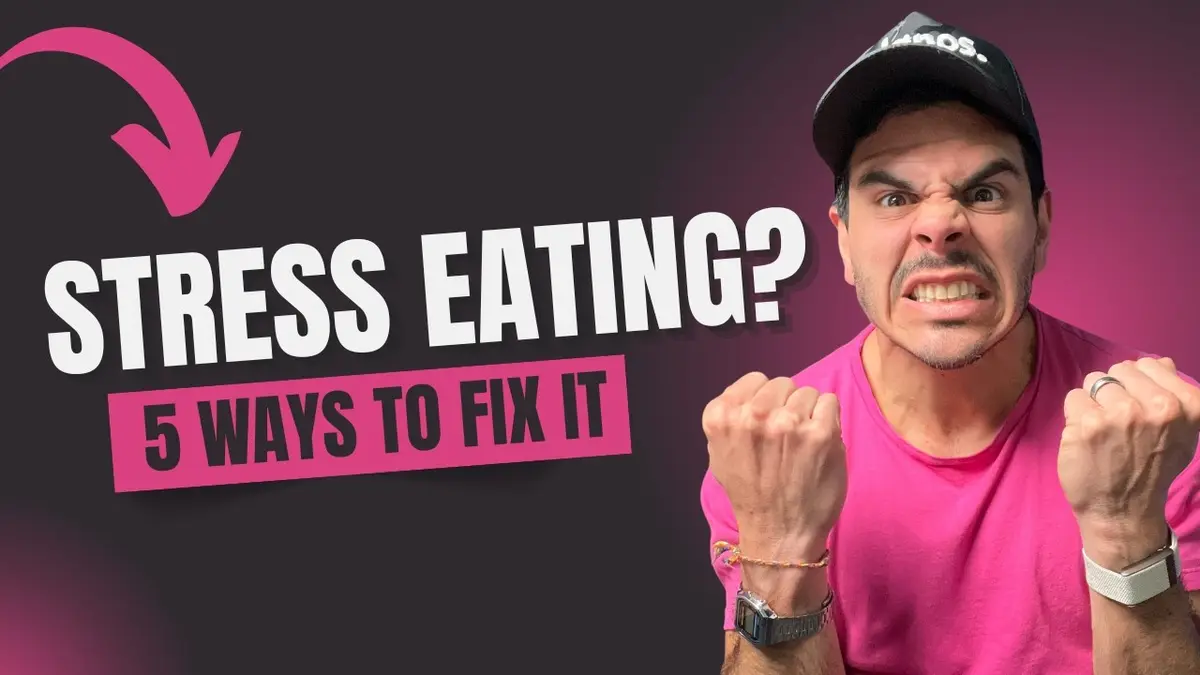
There are five main triggers that drive stress eating. Most people recognize themselves in at least two or three of them.
Trigger 1: Stress and Anxiety
A difficult work call. A toddler tantrum. A pile of unread emails at 8pm. That cortisol spike I described makes your body crave a quick dopamine hit from food, and it usually craves something sweet or fatty.
Here’s the key insight: stress-related cravings are short-lived. If you can delay acting on them for just five minutes, the intensity drops dramatically. That’s not a theory. It’s how the neuroscience of craving actually works.
The fix: a five-minute pause ritual. When you feel that stress craving hit, step away from the kitchen. Take three slow, deep belly breaths. Then brew a cup of tea, take a short walk around the block, or do anything that puts physical distance between you and the pantry for five minutes.
What you’re doing is giving your prefrontal cortex, the rational, decision-making front part of your brain, time to come online before your emotional brain makes a decision. Your emotional brain reacts first. Your rational brain is slower but smarter. Buy it five minutes and it will almost always win.
This is also called interrupting a habit loop: stress is the cue, reaching for food is the routine, and the dopamine hit is the reward. Guilt usually follows. Once you become aware of your specific loop, you can interrupt it before the routine kicks in.
Trigger 2: Fatigue
The afternoon energy crash. Late at night when you’re exhausted but still have things to do. When you’re tired, your body frequently mistakes fatigue for hunger and specifically craves quick carbs: candy, chips, anything promising instant energy.
Here’s why this happens. Busy people skip meals. By nighttime, the body is genuinely short on energy and rings alarm bells. The problem is that in that depleted state, nobody reaches for broccoli. You reach for whatever provides the fastest dopamine response, which is usually the thing that leaves you feeling worse 20 minutes later.
The fix: refuel throughout the day so the bill doesn’t come due at night. Avoid skipping meals. Anchor breakfast, lunch, and at least one protein-rich snack so your body isn’t running a deficit by evening. At night, start with a tall glass of water because dehydration consistently mimics hunger and worsens fatigue. If you’re genuinely hungry after that, go for a protein-and-produce combination: apple and peanut butter, Greek yogurt with berries, something that provides steady energy without a sugar crash.
One client of mine, a lead singer for a well-known band, was struggling badly with this pattern. He was doing intermittent fasting, skipping breakfast, and collapsing into stress eating every evening. We replaced the fasting protocol with a consistent breakfast, a solid lunch, and two high-protein snacks. The nighttime spiral essentially stopped.
Trigger 3: Boredom
You’re scrolling your phone, watching TV, or finally sitting in a quiet moment, and suddenly you’re standing in front of the open refrigerator staring at it like something new is going to appear.
This one isn’t about hunger at all. It’s about stimulation. Your brain is looking for something interesting to do, and food becomes entertainment. This is also why parties feel uncomfortable when you’re not eating or holding a drink: your brain wants something to do with your hands and your attention.
The fix: redirect the urge into activity. Play a song and dance for three minutes. Step outside for fresh air. Text a friend. Fold laundry. Do a puzzle. Make a cup of herbal tea and actually sit with it. The point is to occupy your hands and your mind so the urge has time to pass. It will pass. Usually within a few minutes, the urge to snack dissolves when the brain finds another source of stimulation.
Trigger 4: Overwhelm
This is the one that catches parents and high-performing professionals most off guard.
When life feels chaotic and decisions are stacking up faster than you can make them, food becomes the fastest available path to a moment of control. You’re running late, the kids are being difficult, work is spiraling, and suddenly you’re ordering pizza or hitting a drive-through because you cannot make one more decision. The food isn’t even the point. The relief from deciding is.
The fix: plan for chaos before chaos arrives. On busy days, have simple meal structures ready with zero decision-making required. I keep a rotisserie chicken on my regular grocery list specifically for this reason. Pre-washed salad. Microwaveable rice packets. A go-to order at two or three restaurants you trust. Healthy snacks placed at eye level in the refrigerator and pantry so the default reach goes to the right thing.
In the moment when you feel that “I can’t handle this” wave coming, pause and tackle one small, completable task. Regaining a sense of control in one area, any area, significantly reduces the urge to self-soothe with food.
Trigger 5: Emotional Pain
Sadness, loneliness, or just feeling low. This is the trigger behind the stereotypical ice cream on the couch scenario. Food feels comforting in the moment. It usually leaves you feeling worse afterward, physically from the food choices and emotionally from the guilt that follows.
The fix: replace food with connection or self-care. Call or text someone, even if it’s just for five minutes. Take a warm bath. Write down what you’re feeling: “I feel upset because...” sometimes provides relief without requiring anything else. Naming an emotion reduces its intensity. That’s documented in the psychology research and it works.
If you still want a treat after you’ve addressed the underlying emotion, that’s completely fine. Portion out a small amount and eat it slowly and intentionally. There’s a meaningful difference between mindfully enjoying something and mindlessly eating to avoid or shut down a feeling.
How to Put This Into Practice
Five strategies is a lot to remember when you’re already stressed. Here’s how to make it simple.
This week, identify your personal triggers. For the next seven days, pay attention to when stress eating happens. After work calls? When the kids are difficult? During the afternoon energy dip? At night when you’re exhausted? You’re looking for patterns, not judging yourself for them.
Then build a two-item emergency toolkit. Write down your top two triggers and the strategy that matches each one. Put that list somewhere visible: your refrigerator, your phone’s home screen, your bathroom mirror.
A practical example: if your triggers are afternoon fatigue and evening overwhelm, your toolkit might look like this. Tired at 3pm: drink water, take a five-minute walk. Overwhelmed after work: complete one small task, take three deep breaths.
In the first week, expect imperfection. That’s not a failure. Catching yourself halfway through stress eating and thinking “I’m doing that thing again” is awareness, and awareness is the first step toward change. Start with the one strategy that feels most natural and build from there. Don’t try to overhaul everything at once.
The Bottom Line
Emotional eating is not a willpower problem. It’s a systems problem. Your brain is responding to real triggers with real biological drives, and trying to white-knuckle through those drives with discipline alone is a losing strategy that most people have already tried and abandoned.
The five triggers are stress and anxiety, fatigue, boredom, overwhelm, and emotional pain. Each one has a specific, practical response that works with your biology rather than against it.
Pick one trigger that resonates most. Implement just that one strategy this week. Build from there. That’s how the cycle actually breaks.