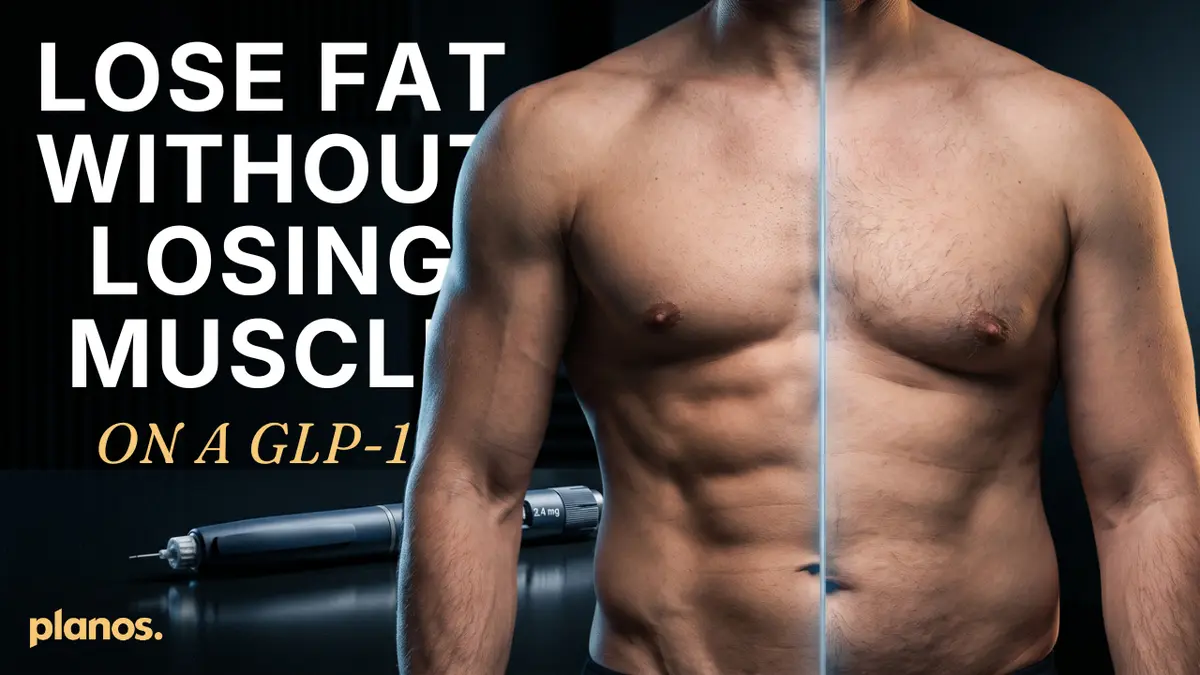
The Weight Is Coming Off. But So Is Something Else.
People who have been on GLP-1 medications for a while are starting to show up in my practice with a problem nobody warned them about. It's not the weight. The weight came off. It's what came off with it.
The scale looks great. But underneath that number, a lot of people are quietly losing muscle, and most of them have no idea it's happening.
What's Actually Causing the Muscle Loss
Here's the part that gets misunderstood most often, and it matters. The medication itself is not damaging your muscle. Ozempic, Mounjaro, Zepbound: none of these drugs directly break down muscle tissue. That's not how this works.
The problem is the appetite suppression they create. These medications can turn your hunger down so hard that you end up eating far too little, far too fast. And when calories drop that aggressively, your body doesn't just burn fat. It starts breaking down muscle to meet its energy needs.
Muscle loss on a GLP-1 is not a drug side effect. It's a side effect of losing weight too quickly with too little protein and no reason for your body to hold onto the muscle it has. And that distinction matters because it means this is completely preventable.
Why Losing Muscle Is a Bigger Problem Than Most People Realize
Muscle is not just cosmetic. It drives your metabolism, supports blood sugar management, and determines how well you function and age over time.
When you lose muscle, your resting metabolism can slow. Not dramatically, but measurably. Muscle is metabolically active tissue. It requires energy to maintain. Fat, by contrast, is essentially inert. It just sits there. Losing fat improves your metabolic health. Losing muscle works against it.
Here's where this becomes a trap. When people stop their GLP-1 medication, appetite often comes back fast and hard. If you've lost muscle during the process, you now have a slower metabolism, less tissue to burn calories, and a full appetite returning at the same time. The weight comes back, and it comes back as fat. You end up smaller but softer, weaker, and with a body composition that's actually harder to work with than before you started.
The goal of GLP-1 therapy should not just be weight loss. It should be fat loss, with muscle preserved.
Four Levers That Protect Your Muscle
1. Protein First, Every Meal
Aim for 0.7 to 1 gram of protein per pound of your goal body weight. If you have more than 20 pounds to lose, use your goal weight as the target, not your current weight.
When appetite is suppressed, most people chronically undereat protein without realizing it. The fix is intentional: eat your protein source first before anything else on the plate. If solid food feels difficult, protein shakes or drinks count. Front-loading protein earlier in the day also helps, especially if appetite tends to disappear by afternoon.
This is the single most important nutritional lever on this list. Without adequate protein, your body has no raw material to maintain muscle regardless of what else you do.
2. Resistance Training, at Least Twice a Week
Cardio alone will not protect your muscle. In a large calorie deficit, it can actually accelerate muscle loss. What your body needs is a clear signal that the muscle it has is being used and needs to be kept.
Resistance training sends that signal. You don't need to train like a bodybuilder. Two to four sessions per week of lifting against meaningful resistance is enough to tell your body to hold onto what it has. Without that signal, there is no reason for your body to prioritize muscle preservation over faster weight loss.
3. Control the Rate of Weight Loss
Losing weight quickly feels like a win. It's also one of the fastest ways to lose muscle.
When someone I'm working with is dropping more than two to three pounds per week consistently, that's a red flag. At that pace, a meaningful portion of what's coming off is likely muscle, not fat. The response isn't to push harder. It's to eat more to slow the loss down to a rate that better protects lean tissue.
That sounds counterintuitive. Eating more to lose weight better. But a slower, more controlled rate of loss, roughly 0.5 to 1 pound per week for most people, produces far better body composition outcomes than aggressive rapid loss.
4. Recovery Is Not Optional
Sleep, rest, and stress management are not afterthoughts. They're part of the system. Poor recovery directly impairs your body's ability to maintain and repair muscle tissue. If training breaks tissue down and nutrition provides the raw materials to rebuild, recovery is when the actual rebuilding happens.
Chronic under-recovery means your training produces stress without adaptation. You get the cost of the work without the benefit.
How to Know It's Actually Working
Stop using the scale as your only measure. The scale can't tell you what you're losing.
Track your strength in the gym. If your lifts are holding steady or improving, you're almost certainly preserving muscle. If they're declining week over week, something in the system needs adjusting.
Take progress photos monthly. Visual changes in body composition often show up before the scale reflects them.
For more precise tracking, a body composition scan gives you real data. An InBody scan once a month is accessible at many gyms and gives a reasonable picture of where your muscle and fat mass stand. A DEXA scan every three to six months provides a more accurate measurement and is worth doing if you want to monitor this closely throughout your GLP-1 journey.
The Bottom Line
GLP-1 medications are a powerful tool. But the tool takes weight off. The system is what makes sure the right weight comes off, keeps you strong in the process, and protects your results when the medication ends.
If you're on a GLP-1 right now and not doing these four things, start with protein. Hit your target every day before anything else. Add resistance training twice a week minimum. Watch your rate of weight loss and slow it down if it's moving too fast.
The medication handles the appetite. You handle the muscle. That's the combination that actually works.